

 Login
Login


 Back to Blog
Quick answer: Menopause hormone therapy (MHT, sometimes called HRT, MT, HT) replaces the estrogen your body stops making during peri/post menopause, usually with progesterone added if you still have a uterus. The FDA has approved it to treat moderate-to-severe hot flashes and night sweats, to treat the vaginal and urinary changes of menopause, and to help prevent postmenopausal osteoporosis. It is also used when estrogen is lost early, from premature or early menopause. It is a decision you make with help of a doctor, ideally a menopause trained/experienced doctor.
Let’s talk about the thing that makes so many women freeze up. You mention hormone therapy, and someone at the table says, “Doesn’t that cause breast cancer?” That fear is real, and it came from a study that was misinterpreted. In 2002, headlines about the Women’s Health Initiative (WHI) study landed hard and scared a generation of women and their doctors away from estrogen for menopause. Here is what got lost in those headlines: the science has been re-examined carefully since then, and the picture is more nuanced than “dangerous.” For many healthy women who are under 60 or within 10 years of their last period, The Menopause Society says the benefits of treating menopause symptoms generally outweigh the risks. Not for everyone. But the blanket fear was never the right reaction. Let’s walk through what is actually true.
What is menopause hormone therapy?
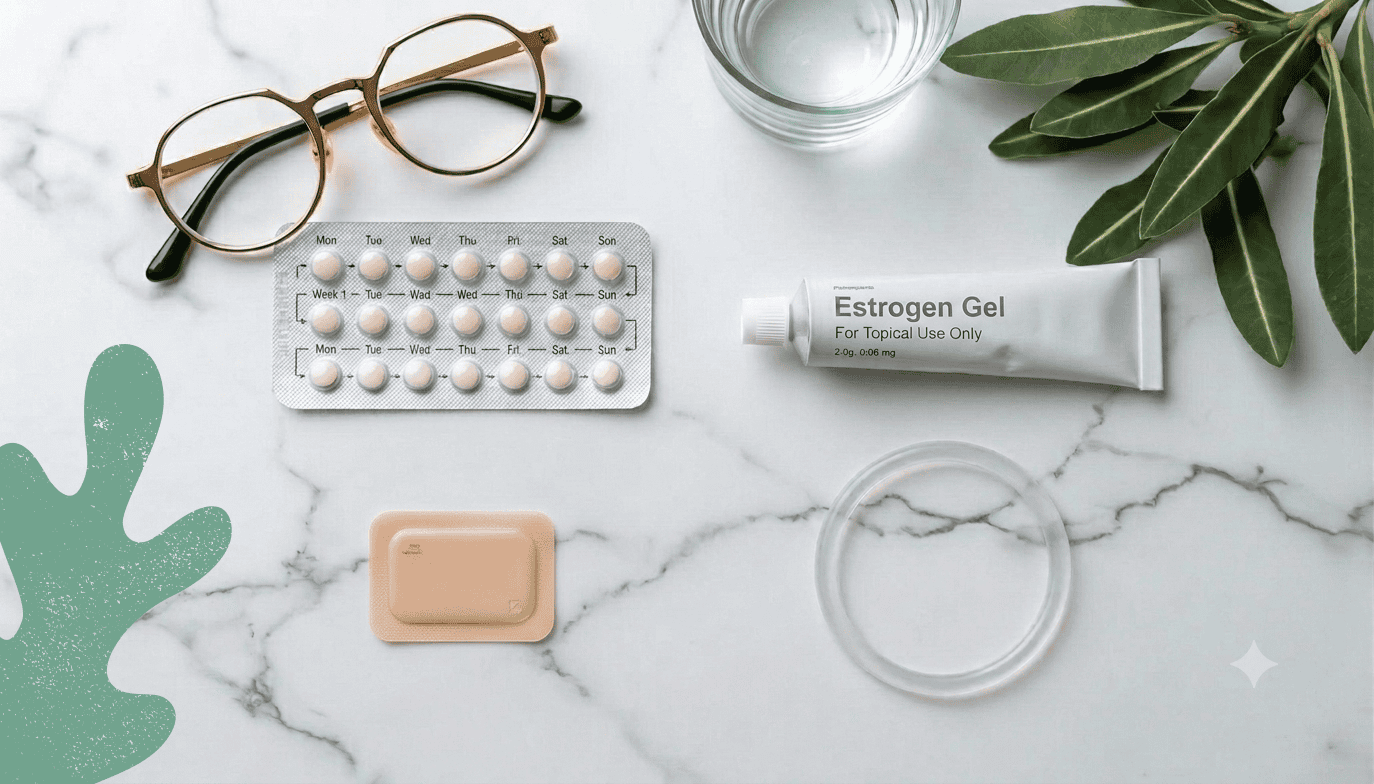
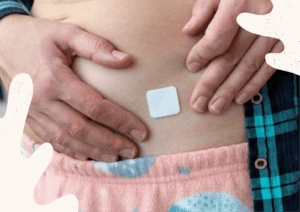
Menopause hormone therapy (MHT) replaces the hormones, mainly estrogen, that your body stops producing as you go through menopause. It comes in a few forms. There is estrogen taken by itself, and there is estrogen combined with progesterone. FDA approved/tested estradiol can be delivered as a pill, a patch, a gel, spray, vaginal ring or a low-dose cream. Tablet, or ring used vaginally. The route matters, because how you take estrogen can change its risks, which is one reason this is best done with a menopause trained/experienced doctor.
What is hormone therapy FDA approved to treat?
The FDA has approved menopause hormone therapy for a specific set of uses, and these are the ones that are safe to get treated online:
- Moderate-to-severe hot flashes and night sweats. These are called vasomotor symptoms, and The Menopause Society states that hormone therapy is the most effective treatment for hot flashes and night sweats.
- Genitourinary syndrome of menopause (GSM). This includes vaginal dryness, painful sex, vaginal or urinary discomfort (pain with peeing, feeling like you need to pee when there isn’t much pee, having to pee frequently), and recurrent urinary tract infections. Low-dose vaginal estrogen is FDA-approved specifically for these local vaginal/urethral/urinary symptoms.
- Prevention of postmenopausal osteoporosis. Standard-dose estrogen hormonal therapy helps protect bone and reduce fracture risk later in life.
- Estrogen loss from premature or early menopause, including primary ovarian insufficiency, when the body stops making estrogen years ahead of the typical timeline.
The symptoms above are what the FDA currently has approved HT for. Know that if you treat the above with estrogen, then most of the 130+ symptoms get better. However, these are the symptoms for which an online doctor menopause service can treat.
Estrogen alone versus estrogen plus progestogen
Here is a distinction that trips people up. Whether you take estrogen by itself or estrogen with a progestogen depends on one thing: whether you still have your uterus.
If you have had a hysterectomy, you can generally use estrogen alone. If you still have your uterus, The Menopause Society explains that a progestogen is added to protect the lining of the uterus, because estrogen on its own can overstimulate the lining leading to endometrial cancer.
Is hormone therapy safe? Understanding the risks
Safe is not a yes-or-no word here. It depends on who you are, when you start, and how you take it. Let’s be honest about both sides.
For healthy women who begin therapy under age 60 or within 10 years of menopause, the benefits of treating symptoms often outweigh the risks. Starting later or when other health conditions are present shifts that balance.
The risks are real and worth naming. Depending on the type, timing, and route, hormone therapy can carry a small increased risk of blood clots and stroke, and these risks are lower with the transdermal options (patch, spray, gel) than with pills. There is also a breast cancer consideration that differs between estrogen-alone and estrogen-plus-progestogen therapy, and it relates to what type of estrogen and progestagen you use and how long you use it. And if you have a uterus and take estrogen without a progestogen, there is a risk for endometrial cancer, which is the whole reason why the progestogen is added. None of this means “avoid at all costs.” It means this is a decision made with information and a doctor with menopause knowledge who knows your history.
What about your bones and estrogen in peri/menopause?
Estrogen helps protect your bones, which is why preventing postmenopausal osteoporosis is one of the FDA-approved uses. But hormone therapy is not the only lever, and bone health deserves attention no matter what you decide about estrogen/MHT. If you are at higher risk of osteoporosis (your mother, aunt had osteoporosis, you don’t get enough calcium, you have a DEXA that says you have osteopenia), then you should consider estrogen during peri/postmenopause.
The NIH recommends that women over 50 get 1,200 mg of calcium a day, largely from foods like milk, yogurt, cheese, canned fish with bones, and leafy greens such as kale and broccoli. For vitamin D, which the NIH describes as essential because it helps your body absorb calcium, the recommendation is 600 IU a day through age 70, rising to 800 IU after 71. Sunlight, fortified milk, and fatty fish like salmon all contribute. Strong bones are built on both, working together.
Who is not a candidate?
Hormone therapy is not right for everyone, and some conditions make it unsuitable. According to The Menopause Society, hormone therapy is generally not appropriate if you have a history of breast cancer or uterine cancer, unexplained vaginal bleeding, active liver disease, a history of blood clots, or certain cardiovascular diseases. This is not a complete list, and only a doctor can assess your full picture. The point is simple: your history determines whether this is even on the table, and that is why an evaluation by a menopause trained/experienced doctor comes first.
You do not have to sort through the headlines alone
Peri/menopause is not something you have to white-knuckle through in silence, and you do not have to sort through decades of confusing headlines alone. If you want to understand whether peri/menopause hormone therapy fits your body and your history, our doctors are here to help you. You can explore peri/menopause care with Pandia Health, learn about our hormone therapy service, or read up on perimenopause if you are earlier in the journey. Asynchronous care with a 100% doctor team means the conversation can start whenever you are ready.
This article is for educational purposes and is not a substitute for personalized medical advice. Whether hormone therapy is right for you is a decision to make with a doctor.